Recovery Courts
About
The General Assembly enacted the North Carolina Drug Treatment Act in 1995. North Carolina General Statute Chapter 7A, Subchapter XIV, Article 62, established the North Carolina Drug Treatment Court Program in the Administrative Office of the Courts (AOC), and provided guidance on the implementation and operation of local Drug Treatment Courts (DTC). North Carolina Drug Treatment Courts have since been renamed North Carolina Recovery Courts as they have expanded to work with participants classified as veterans, those with a mental health diagnosis, and those convicted of driving while impaired.
Recovery Courts provide an intensive, judicially supervised intervention designed to support individuals involved in the criminal and juvenile court systems who are navigating substance use, mental health challenges, or co-occurring disorders. This initiative focuses on high-risk and high-need adult participants, juveniles adjudicated in delinquency court, veterans, and parents involved in abuse/neglect/dependency cases. A Recovery Court consists of a team of court and community professionals who manage cases closely, helping participants become healthy, law-abiding, and productive members of their families and communities.
Goals of Recovery Courts
- REDUCE alcohol and other drug dependencies among participants.
- REDUCE criminal recidivism and the long-term impact of drug-related offenses on both communities and courts.
- INCREASE personal, familial, and societal accountability of individuals with a substance use, mental health, or co-occurring disorder.
- PROMOTE effective collaboration and utilization of resources among criminal justice, treatment, and community agencies.
Recovery Court Types
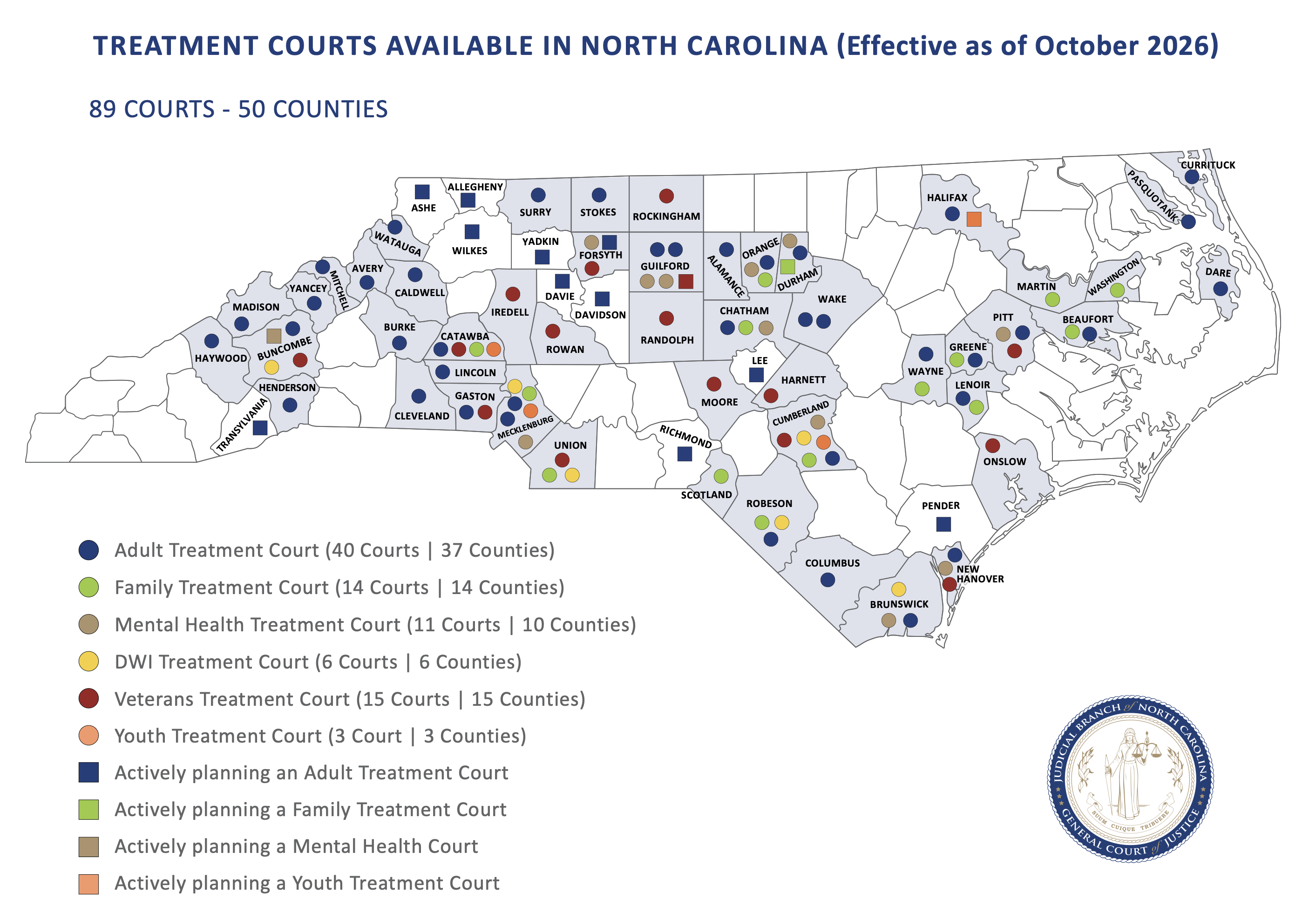
- Adult treatment courts aim to promote recovery and reduce recidivism in high-risk, high-need individuals with repeat infractions related to their substance use, mental health, and co-occurring disorders.
- DWI treatment courts aim to promote recovery and reduce recidivism in high-risk, high-need individuals with repeat DWI violations.
- Family treatment courts work with parents and guardians who are in danger of termination of parental rights due to the abuse or neglect of their children resulting from substance misuse, unmanaged mental health disorder, or co-occurring disorders.
- Youth treatment courts work with community-based, high-risk, high-need juvenile participants whose drug and/or alcohol use is negatively impacting their lives at home, in school, and in their community.
- Mental health treatment courts aim to promote recovery and reduce recidivism in high-risk, high-need individuals with repeat infractions related to their serious mental health or co-occurring mental health and substance use disorder.
- Veterans treatment courts aim to promote recovery and reduce recidivism in military veterans with repeat infractions related to substance use, mental health, and co-occurring disorders.
- Links:
Judicially Managed Accountability and Recovery Courts (JMARC) State Advisory Team
The State Judicially Managed Accountability and Recovery Court Advisory Committee is established to develop and recommend to the Director of the Administrative Office of the Courts guidelines for the NC JMARC Program and to monitor local JMAR courts wherever these courts are implemented and administered.
Recovery Courts
Adult Treatment Courts
An intermediate sanction that targets repeat offenders who have a substance use, mental health, or co-occurring disorder.
Family Treatment Courts
Work with parents/guardians in danger of termination of parental rights due to the abuse/neglect of their children from substance misuse.
Youth Treatment Courts
Work with community-based, high-risk/need juvenile offenders whose drug/alcohol use negatively impacts their lives at home/school/community.
Mental Health Treatment Courts
Work with nonviolent offenders who have been diagnosed with a substance use, mental health, or co-occurring disorder.
Veterans Treatment Courts
Work with military service veterans with a substance use, mental health, or co-occurring disorder.
DWI Treatment Courts
Work with repeat impaired drivers.
Publications, Reports, and Resources
North Carolina Recovery Courts Standards
Statutory requirements for jurisdictions planning and operating a recovery court.
Adult Treatment Court Best Practice Standards
January 2026 edition from AllRise includes detailed recommendations.
North Carolina Recovery Court Legislative Report
Annual Report on North Carolina’s Recovery Courts (N.C.G.S. §7A-801).
Recovery Courts Primer
The Primer explains steps required to start a new recovery court.
Contact
Telephone(919) 890-1264
EmailRecovery Courts
Mailing AddressPO Box 2448
Raleigh, NC 27602
Physical Address901 Corporate Center Drive
Raleigh, NC 27607